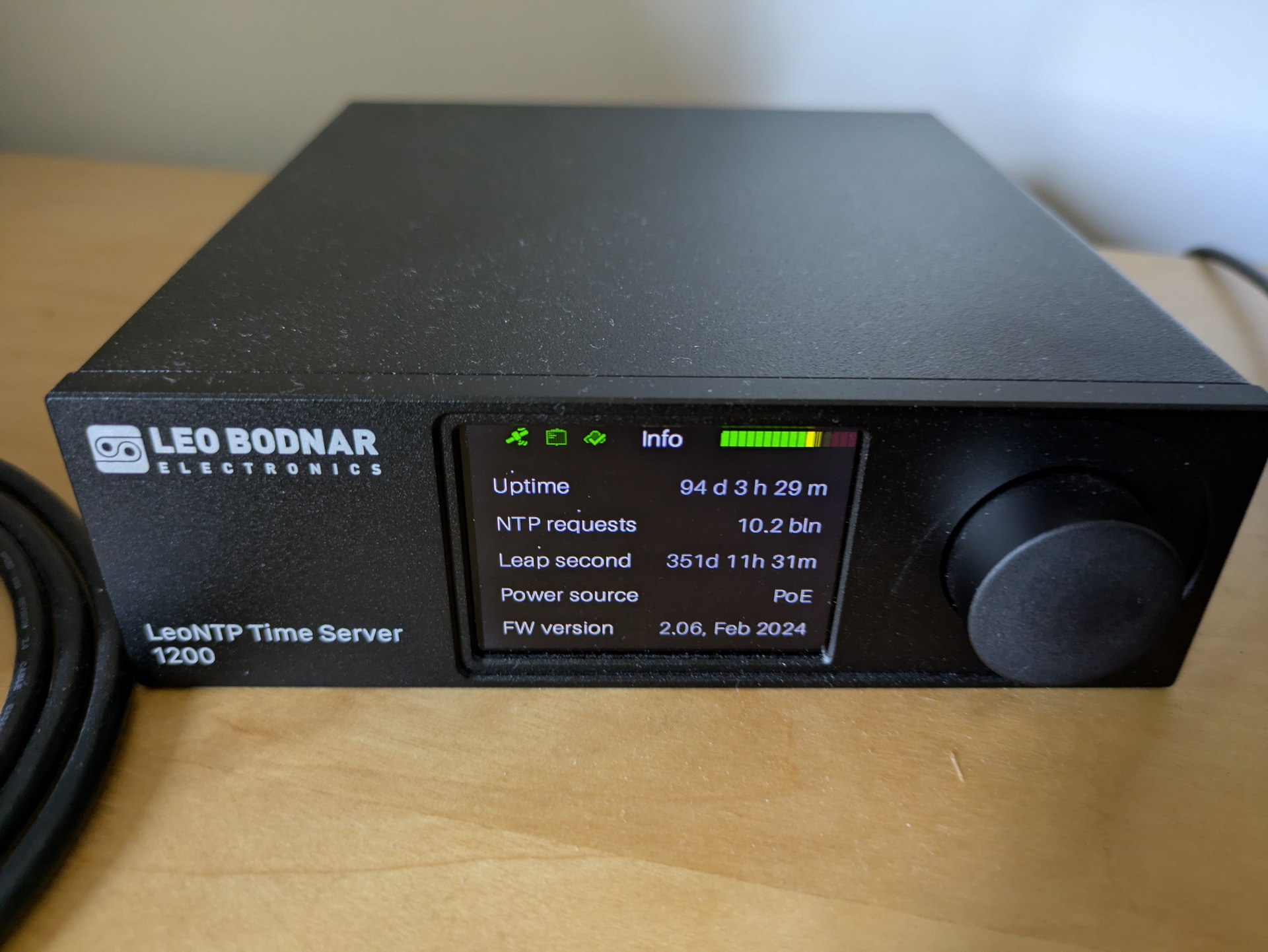
Interesting. I think the NTP pool monitors collect leap second indicator data, but I don’t know if that is shown anywhere except in the CSV score files for individual servers. On the other hand, even if the NTP server itself thinks there would be a leap second in 351 days, it would keep this information to itself (ie. without setting the leap second indicator bits in the responses) until the leap second day (earlier NTP RFCs) or the leap second month (RFC 5905). Therefore the NTP pool monitors are unlikely to detect an issue like this at this moment.
For reference, the latest IERS bulletin (which is the ultimate truth on leap seconds) only says that there will be NO leap second at the end of 2025. If there’s going to be a leap second mid-2026 it would probably be announced in late December 2025 or early January 2026. So yeah, you’re right that your leap second information is bogus.
While leap second files were initially provided by US institutions such as NIST, in early 2014 it was proposed that the IERS should also provide a leap second file. Reasons were:
The IERS is the institution that decides whether a leap second is to be scheduled
Unlike NIST which is a pure U.S. organization, the International Earth Rotation Service is an international institution.
The leap seacond file at IERS (link) does not indicate a leap second in 2026.
LEAP SECOND
Atomic clocks are more stable than the rate of the earth's rotation since the latter undergoes a full range of geophysical perturbations at various time scales: lunisolar and core-mantle torques, atmospheric and oceanic effects, etc. Leap seconds are needed to keep the two time scales in agreement, i.e. UT1-UTC smaller than 0.9 seconds. Therefore, when necessary a "leap second" is applied to UTC.
Since the adoption of this system in 1972 it has been necessary to add a number of seconds to UTC, firstly due to the initial choice of the value of the second (1/86400 mean solar day of the year 1820) and secondly to the general slowing down of the Earth's rotation. It is theoretically possible to have a negative leap second (a second removed from UTC), but so far, all leap seconds have been positive (a second has been added to UTC). Based on what we know about the earth's rotation, it is unlikely that we will ever have a negative leap second.
That is what is being said. However, there are more problems. Like changing North-pole, changing Earth-Axe and ellipse Sun-Earth that changes.
All that being said, I do not see why UTC is correct.
As it all started with GMT, where the Sun was right above the sky at noon. We still use that.
But is the Sun still there? I doubt it. So I think it should be redefined to the same.
Or my time is so waaaaaay off, that it makes no sense.
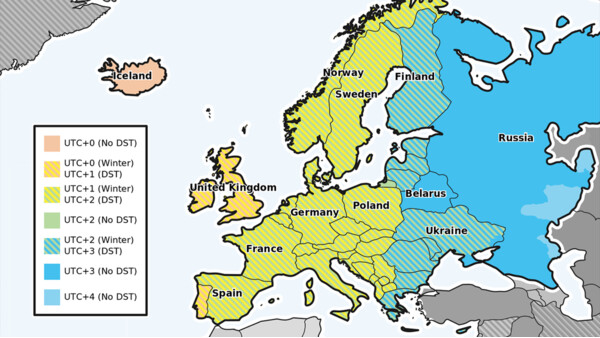
Belgian time is sooooo wrong, it’s not funny. We are at GMT +1/+2 but we should be GMT -1! Or at best GMT/UTC.
It becomes worse and worse. So I ask, what is the correct UTC time? As I get the feeling it’s drifting beyond what is real.
Just my opinion. BTW, most of Europe is still at BERLIN-time, invented by Hitler to have his empire at the same timezone….and it’s bad for most. Yet still not changed.
How stupid is that? So what is the time we need? I think UTC is wrong. But that’s my opinion.
In my city, mid winter, sunrise is at 7:00 and sunset at 17:30. Not much different from you, and we don’t have daylight savings time. Lowest solar noon is 11:50 in November, highest is 12:21 in February.
For Belgium, I do see that, as winter continues, the solar noon moves closer to 13:00, and then you INCREASE your time zone to take it closer to 14:00? WTF? You are supposed to DECREASE? That would have moved it back to 12:00? Those Belgians are crazy…
Don’t blame your solar noon on UCT, blame in on Belgians.
When there was no time zones, on every place the local noon (12 o’clock) was defined by the Sun being on the zenith. That is what should be the target, in the middle of each time zone. Biorhythm should adapt to that time.
Local government? Here in Europe there is a big discussion dropping the summer time, the EU already decided so since some years. No countries are implementing it. There is no agreement what should be the time to keep; the winter or the summer time. By my opinion the winter time (the original, historical, I described above why) should be kept if we change, but some people think that keeping the summer time for the winter should be the way to go.
Even then, the best option would be to keep the summer and winter time different as it is today.